Painter of the mystical, otherworldly, sensual, and whimsical.

I'm a painter living and working in the beautiful finger-lakes region of Western New York State. I am also an avid gardener and nature lover, so the lush green rolling hills, gentle streams, and majestic lakes that surround my home in this world often appear in the fantasy worlds of my paintings.

Many of the pieces draw inspiration from folk tales, myths and legends. These "teaching tales" were what drew us together around our hearth-fires for centuries, and I believe those stories still carry power.

I enjoy looking at these ancient tales, through my eyes, and painting what I see, no matter if it's beautiful or disturbing. But what's more fun is when others can see those same paintings and find something within of value that speaks to their soul directly. I do not plan for this, but am honored when it happens, and, oh, yes, do love hearing about it every time that it happens. It reminds me that maybe we are not so different after all.

Glad to meet you, and please enjoy the paintings!

Sunday, September 23, 2012

"Have you been half asleep, and do you hear voices? I've heard them calling my name."


A schizoid episode feels a lot like being Animal. Please do not read that sentence as some great piece of Jungian philosophy, or Animistic Theology.
I really do mean the Muppet. 

Thankfully, I married Floyd. 


Above, the characters of Animal and Floyd, along with Jason Segel, the writer and star of  "The Muppets" (2011)  He plays Gary, the human roommate of new Muppet (and representative of every Muppet fan ever), Walter. 


 July 17, 2008:
Blew tire on the way into work. Sidewall of driver's side front tire was gashed to hell and back. This, after brakes failed on Monday. Brake lines "broke" and needed replaced kinda all-of-a-sudden like.

Beginning to suspect somebody is trying to kill me. Too many coincidences for one week. Not to my liking. Not one bit. However, if I am right (and, for a paranoid nut-case, I'm accurate a surprising amount of the time) the attempts to kill me thus far have been made of FAIL with FAIL SAUCE and a side of FAIL. I'm still here. That means I win. Better luck tomorrow.

 Husband is beginning to suspect they need to up my medication. Sick. Tired. Confused. Confuse and scare too easily. Soul is aching. Want to sleep. Want to not have to worry ever again... but really don't want to give some asshole the satisfaction of being the one to get the victory. Want the world to make sense again. Not quite sure how to do that. It's late. I should sleep. Maybe the brain will settle back into place if I unplug it and run a solid defrag...


I could provide dozens of miniature essays like the one above.  When mood disoder swings downward and my perception of the world around me isn't on-track, my worldview becomes a dingy, folded, black-and-white photograph, with dark clouds on the horizon.  Like a dream or a hallucination that you can't walk out of, everything in this gray version of the world seems to be correct, and you wonder if this is the way it always was.  Were the bright colors of happiness, faith in myself, and interconnectedness with others simply some sort of altered reality? Am I I'm only now seeing true reality through unclouded eyes?  Which one is the truth?

Several years ago, I was diagnosed by a psychiatrist with Schizoaffective disorder.  This is a sort of schizophrenia that combines with a bi-polar like mood disorder:  unmedicated, the highs are exquisite, the lows are crushing. and reality may or may not be what you think it is.

When this happens, I turn to my husband Rob, as a mirror and a second set of eyes, and let him know what I'm seeing, what I'm feeling. Just talking about it and letting him step into my world and understand it, lets me calibrate how far my reality has drifted from the commonly accepted one.  With the skill of Carl Rogers, he listens without harsh judgments or ridicule.  Even if the Schizoid reality is pure fantasy, it's often fascinating.  Beautiful or scary, my brain writes some really interesting material.

Without judging what the "realness" of my experiences, he encouraged me to draw the people, places, and things I see on the other side, and the characters that I talk to, be they aliens, gods, angels, or restless spirits.  Taking my own, unique strangeness and using it to fuel my artwork became a way to divert the river, and a way to show others the world I see.  If it's real, now you can see it, too.  I'm sharing that with you.  If it isn't real, maybe you can enjoy what I'm showing you anyway.

The explanations ceased to matter.  We both know that I see the world the way I see it, and, instead of becoming something terrible that I can't control, it becomes an inside story we share, and continue to share with those who want to look long enough to step into that world, too.  Sometimes, they tell me that they see the same beings the way I do, and my pieces show the  life and form, expressions and thoughts to others who would like to see but can't. I "give it a name." *

It's a serious mental illness, or it's a gift, but Rob never chose to decide.  He listens, he looks at the artwork, and he encourages me in every way he can.  He fell in love with that world, and wants to give everyone else the chance to fall in love with it, too.

When we went to see the new Muppet movie that was released last year (2011) (called, simply enough, "The Muppets,") one part really sang to us.  Since the last time we'd seen them, Animal was diagnosed with rage issues, and is found alongside comedian Jack Black in an anger management class.  Like me, he is trying to stay "in control" of his world, his emotions, and his reactions to them.  He struggles with this throughout the entire movie, until his band mate and closest friend, Floyd, hands him a pair of drumsticks and tells him, "You know what to do."

Animal, of course, does what he's always done, and the only thing that makes him truly happy:  plays drums.

He reflected back to me the same things I feel, but don't know how to talk about.  He "gave it a name."

Walking out of the theater, I turned to Rob and thanked him for being my Floyd, for "handing me the drumsticks," when I really need to just "play drums."  For me, those drumsticks are paint brushes, but when I play them, I can give it a name...

Seeing somebody else's art that speaks truth allows me to see their world, and shows me that, in our core, we are not so different.  We can all give it a name.


"One nation under a groove." -George Clinton.


----------------------------------

*In the movie, Things To Do in Denver When You’re Dead, screenwriter Rosenberg uses “Give it a name,” which betokens affirmation and endorsement. It means “You got that shit right,” “Tell it like it is,” or “Word.” It seconds the motion on a thing that needed to be said. And if it wasn’t already in use before Rosenberg adapted it, well, it should have been. The same phrase, used the same way, also appears in In the short story “Ulysses and the Dogman” by O. Henry, and “Ulysses" by James Joyce. 

Q&A: What is your Primary Medium


Right & Below: "The Morrigan"
preparatory rough pencil sketch &
first layer of color and as a finished piece
(by Portia St. Luke, 2010)


I was recently asked:
What is your primary artistic medium, and why? (You can talk about other things you work in if you want too!) I'm just asking because there seems to be a lot of photographers in [Art Group on Social Media Site] in comparison to people who work in other mediums.

I answered:
 "The best service to mankind is to become immersed in one’s True self." - Saint Bapu Ji, India

My personal process begins, always, with a rough pencil sketch. From there, if it's to be a black & white ink drawing, I proceed to that without any further media involved. If I'm trying for a full-color illo, then light, loose washes of watercolor become the first layer of color. Each progressive layer is slightly thicker, more opaque, more refined, until the last is the finest detail, touching in the hot pops of bright highlights and blackening the few truly dark spaces.  "The Morrigan," was one of the few cases where I reversed this process, working from tightest detail to the loosest.  No process is completely set in stone:  I experiment with wax colored pencils, watercolor pencils, charcoal, chalk, and even digital if the mood strikes me.

I believe that, if we are to live our own truths, as artists, we need to honor what comes best to us, regardless of whether that same medium works best for another. I am not really a photographer beyond dabbling occasionally. I think of myself as an illustrator, because that speaks to my personal truth. Sometimes I will say I'm a painter, but since there is as much drawing as painting in my process, and my style is often called "illustrative," I tend to say, "illustrator." This in no way means I do not appreciate those who have a real skill for photography. I can find artistry in ceramics, sculpture, printmaking, and even basket weaving. *(Have you seen the intricate baskets that have come out of the Japanese masters? Oh, my...)*

One more quote from Saint Bapu Ji: "The moment you realize yourself as the dreamer and the world as your own dream, you will attain salvation."

Friday, September 21, 2012

Who is the most persistent person who has ever lived?


Above: "Amontillado I" c. Portia St. Luke, 1997
(Pastel and charcoal on paper)
Slightly before 1960, Dashrath Manjhi's wife died without any treatment, because the nearest town with a Doctor was 70 km away from their village in Bihar, India. Unfortunately, most of that distance was over a hill in between the village and the town. If it was removed, the trek would have been one-tenth of the distance. Dashrath did not want anyone else to suffer the same fate as his wife. So he did the unthinkable: he single-handedly carved a 360-foot-long (110 m), 25-foot-high (7.6 m) and 30-foot-wide (9.1 m) road by cutting a mountain of Gehlour hills with a hammer, chisel and nails working day and night for 22 years from 1960 to 1982. 

This hand-chiseled passage reduced the distance between Atri and Wazirganj blocks of Gaya district from 70 km to just 7 km.


In 1979, in northern India's Assam region, after flood waters had receded, Jadav "Molai" Payeng, only 16 then, found the place dotted with the dead reptiles. That was the turning point of his life. The teenager began re-seeding the barren sandbar. 30 years later, the spot today hosts a sprawling 1,360 acre of jungle that Payeng planted single-handedly.

22 others, including Cambodian Aki Ra, who personally removed and cleared over 50,000 land mines by himself from Siam Reap region of Cambodia, and Simon Wiesenthal - the Nazi Hunter who dedicated most of his life (post WW II) to documenting and helping hunt down Nazi criminals from all over the world - comprise a list of the most persistent people to have ever lived.

Each story told is amazing, and speaks to the power of perseverance and the will of the human spirit. To read their stories, and vote on which one(s) you feel to be the most persistent person (people) in the world, I encourage you to visit Quora and read the answers to the question, "Who is the most persistent person who has ever lived?"

Mabon Traditions


Above:  "Snow White," c. Portia St. Luke

Mabon, also called the Autumnal or Fall Equinox, was also known throughout Pre-Christian Europe by names such as the Second Harvest, Festival of Dionysus, Wine Harvest, Alban Elfed and Cornucopia. With its browns and oranges, violet, maroon, russet and deep gold, this was the festival for grapes and wine, vines and garlands and gourds, with beautiful images of the Horn of Plenty spilling forth its tasty bounty of the fruits of "Second Harvest." In the New World, Indian corn, rattles, and sun wheels were added to the symbolic elements of this turning of the seasons.  It is also a holiday for recognizing ageing and the end of the natural lifespan of the Sun God, born the previous Yule.  It was known to the indigenous people of Europe that, as every year, he would die his natural death on Samhein, at the mid-point between this Equinox and the Winter Solstice.  After His death, November and much of December pass before the new God-as-Sacred-Child returns to the world, bright and shining, when the light returns after the darkest night of the year.  


But, for now, he is aged, and that age is to be honored.  In this festival, gods and goddesses associated with ageing took their place alongside the more boisterous gods of wine. Wine making and adorning graves both had their place in Mabon custom. The indigenous people of the British Isles often tended to their ancient burial cairns in reverence to this "Autumn of Our Days."  To pass a burial sites and not honor the dead was a terrible taboo.

Dogs, wolves and birds of prey came to be associated with Mabon, as did the stones Amethyst and Yellow Topaz. In addition to the ubiquitous grapes, any vines, and especially ivy, were part of Mabon. Hazel and Cedar trees, hops and tobacco added to celebrating the second harvest.  Traditional herbalists were known to recommend attunement teas with elements (individually or blended) of berries, grape, heather, hops, and sassafras. (Sassafras has been found to have serious health risks, however... I would not recommend it.)

A slightly safer method of honoring the deities can be with ritual oils.  I find the scent of ritual oil or incense perfuming a room can transform that space as easily as good music. Apple blossom, hay/straw, black pepper and patchouly go hand-in-hand with the traditions of Mabon.

Speaking of honoring the Deities, there are plenty to choose from throughout Pre-Christian cultures across the world. All grape and berry goddesses and fruit-vegetable deities seem to play a part in Second Harvest.  Specific Goddesses included: Akibimi (Japanese), Anapurna (Indian), Cessair (Welsh), Epona (Celtic-Gaulish), Harmonica (Greek), Lilitu (Semitic), Mama Allpa (Peruvian), Modron (Welsh), Morgan (Welsh-Cornish), The Muses (Greek), Nikkal (Canaanite), Ningal (Sumerian), Ninkasi (Sumerian), Pamona (Roman), Rennutet (Egyptian), Sin (Irish), Snake Women (Aboriginal), Sophia (Greco-Hebriac), Sura (Indian).

Likewise, with the gods, all wine gods and non-grain harvest gods, as well as gods of fruits, ageing, and abandonment, came to be part of this day.  Dionysus (Roman), Bacchus (Greek), Haurun (Canaanite), Hermes (Greek), The Great Horned God (European), Hotei (Japanese), Iacchus (Greco-Tuscan), Mabon (Welsh), Orcus (Roman) and Thoth (Egyptian) were honored.

A traditional practice is to walk in wild places and forests, gathering seed pods and dried plants. Some of these can be used to decorate the home; others saved for future herbal magick.  (Personally, I try to save them to plant next year, but I'm a gardener as well as an armchair cultural anthropologist.) Feasts tend to revolve around grains, fruits and vegetables, especially corn. Cornbread is traditional fair, as are beans and baked squash.  

To celebrate the fortune of a good harvest while also honoring the dead strikes me as being an amazing combination for this day which, above all else, is about balance:  the balance between light and dark, since, tomorrow, the nights will be longer than the days, and we must begin to brace for the oncoming cold.  Gather friends and family close and celebrate what you have, for, tomorrow, it may not be there. 

"It Begins With a Dream," by Scott Sonnon


It begins with a dream.
Add preparation through diligent research.
Add courage to initiate momentum without support.
Add faith to meet ubiquitous resistance.
Add passion when failures arise frequently.
Add humor when passion temporarily drains.
Add adaptability to adjust to the unknowable.
Add patience as success slowly, occasionally unfolds.
Add perseverance when backslides happen often.
Add gratitude when reflecting upon the great process.
Add service to share the experience of the process.
Add another bigger dream, and restart.
~ Scott Sonnon

Above: Stock image (photographer unknown)


Monday, August 13, 2012

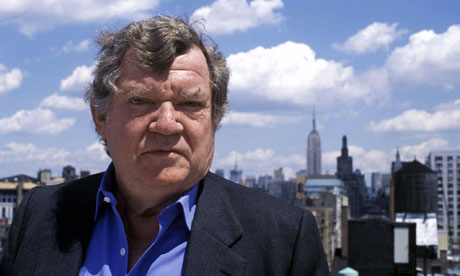
Death of an Art Critic: Robert Hughes


Above: Robert Hughes in New York, where he lived and wrote for Time magazine from 1970. Photograph: Jeremy Pollard/Oxford Film/TV 


Robert Hughes, a critic who came to be known as the scourge of many 'modern' artists, has died.

Whatever your feelings about critics, his writing was always provocatively interesting.

An art professor who I correspond with commented, "I disagreed and had issues with a number of his opinions and arguments, but when he was on point he could be very inspiring. I would show clips of his "Shock of the New" and "American Visions" videos (along with the writing) in my Art History classes and they never failed to capture students' attention and get them interested in the subject."

Another friend who works as a painter in Ontario, Canada, wrote, "He was a great curmudgeon. His critique of market-driven art hype was bitter but largely accurate, I think. He was conservative but not reactionary...  I'll miss his gruff, sometimes brutal art critiques."

"Gruff, sometimes brutal," seems to be a widely-held opinion of the man who was the chief art critic behind TIME magazine for 30 years, and often a traditionalist scourge during an era when art movements fractured into unrecognizability.  He had opinions, and seemed to have no fear of making hamburger out of the art world's sacred cows. In 1993, he described the era's darling of the New York contemporary art world, Jeff Koons, as “so overexposed that it loses nothing in reproduction and gains nothing in the original.”

“Koons is the baby to Andy Warhol’s Rosemary,” he summarized, adding: “He has done for narcissism what Michael Milken did for the junk bond."

While I have no doubt that many contemporary artists will not mourn his passing, I have to respect the fearlessness of a man who is willing to openly point out when the emperor has no clothes.


Thursday, July 19, 2012

“How far you go in life

 ...depends on you being tender with the young, compassionate with the aged, sympathetic with the striving, tolerant of the weak and the strong. Because someday in life, you will have been all of these.” – George Washington Carver

Above: "Walking beneath the Rainbow Sky" (Kenya)